Robotics, FIRST Tech Challenge
- My role
- Captain, Tritonics #17253 (2025–26); electrical lead, #14712 (2024–25); fabrication lead, then operations lead and captain, Ulterior Motive #17253 (2022–24).
- Year
- 2022–2026
- Type
- Competition robots
- Status
- High school, 2022–26
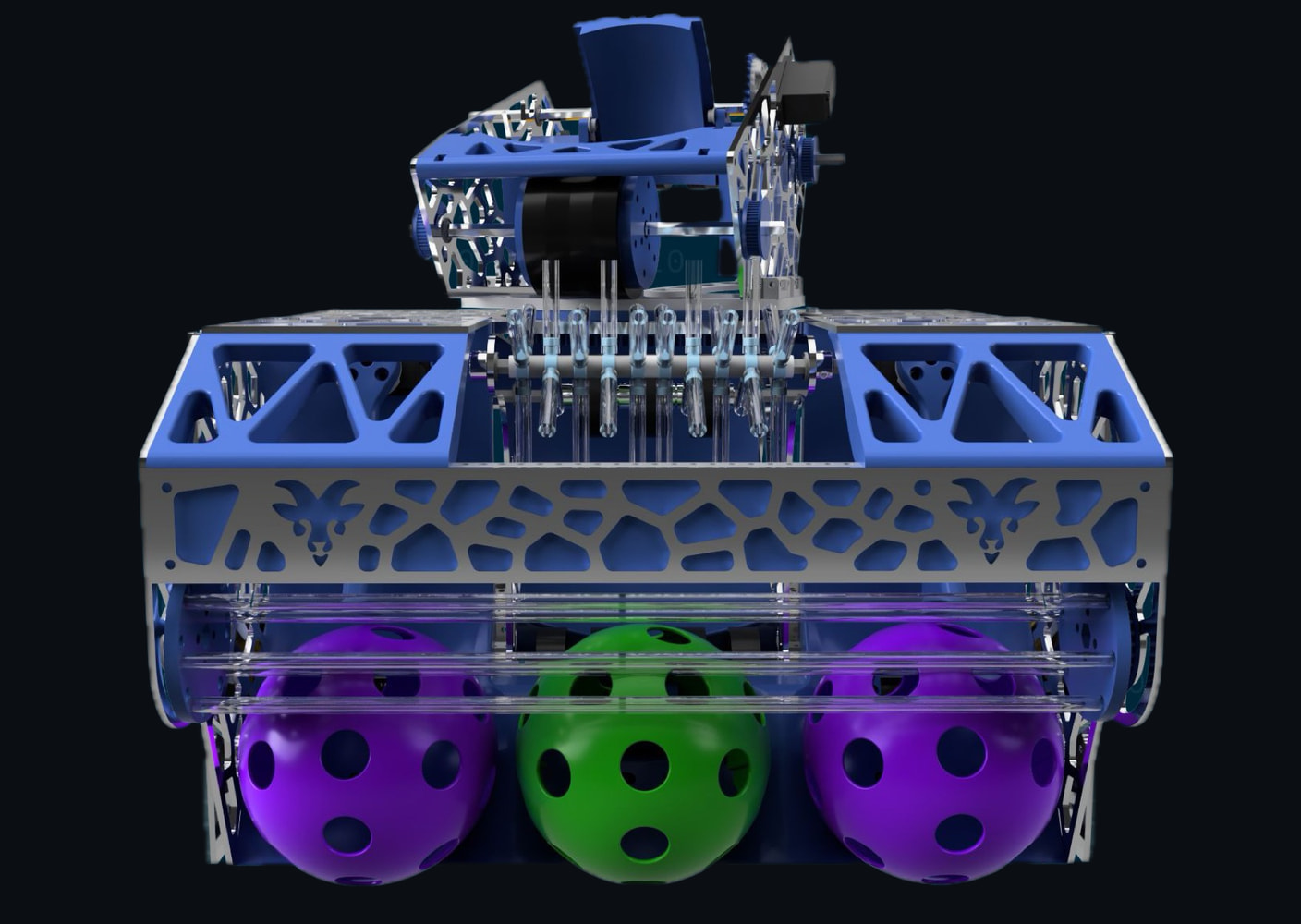
Monti, Tritonics #17253, 2025–26: the render from the cover of our engineering portfolio.
- With Honu, #14712, we won 1st in NYC and the 2nd-place Think Award at the World Championship.
- After half the team graduated, we grew from 7 to 14 members in one season.
- Every subsystem follows an 8-screw rule, so each one comes off in 45 seconds at most.
I did FIRST Tech Challenge all through high school: Ulterior Motive in 9th and 10th grade, #14712 in 11th, where we won first in NYC and took the 2nd-place Think Award at the World Championship, and Tritonics as captain in my senior year. At USC I’m continuing robotics with Advanced Robotic Combat (ARC), the student combat-robotics team.
Results
- before the season’s metal robot; 4 intake, 3 launcher and 2 transfer iterations in wood (team measurement)
- 5full robot iterations
- analysed at 8 mm compression; v = d · 2.64 + 1013, 189 hits, 11 misses, correlation 0.9880 (team measurement)
- 200+launcher trials
- AprilTag lock, with 100% odometry availability and ±0.2 cm path deviation (team measurement)
- 98%
- team growth in one season, with a rookie class that was 67% female (team measurement)
- 7 to 14members
(Robotics, FIRST Tech Challenge)
Robots
Scorpion
Ulterior Motive #17253, 2022–24 · Fabrication lead
A motor at the base of the scissor lift pushes the base beams together, and the geometry drives the structure vertically.
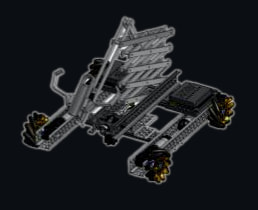
Scorpion, #17253 · Fabrication lead
- Design Award
- Innovate Award, 2nd
- Inspire Award, 2nd
- Design Award, 3rd
Ball-Drive
Ulterior Motive #17253, 2022–24 · Operations lead and captain
Four two-axis balls replace the wheels for more efficient, accurate positioning; it is designed on a master sketch so the parts stay linked.
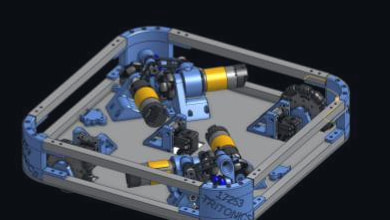
Swerve Drive
#14712, 2024–25 · Electrical lead
A working FTC-scale swerve drive, common in FRC and almost unseen in FTC, co-developed with another team; it competed at NYC-FIRST’s Robot-in-2-Days.
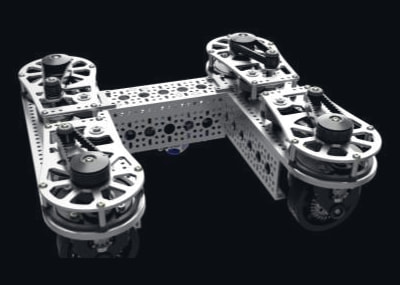
Honu
#14712, 2024–25 · Electrical lead
Belt-driven wheels for customisable wheel torque and a 3-axis intake for quick sample transfer.
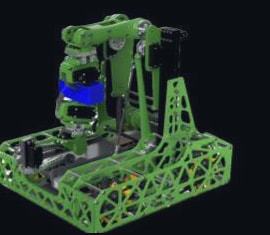
Honu, #14712 · Electrical lead
- 1st place in NYC, advancing to the World Championship
- Think Award, 2nd place, FTC World Championship
- Inspire Award, 1st
- Inspire Award, 2nd, four times
- Connect Award
- Innovate Award
Monti
Tritonics #17253, 2025–26 · Captain
Modular by rule: eight screws to a subsystem, each one off in 45 seconds at most; a three-ball sorting intake; a hooded flywheel launcher on a 1:1 dual-servo turret.
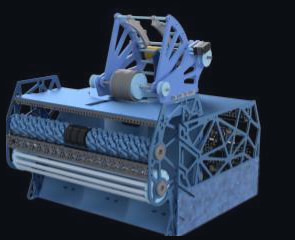
Monti, #17253 · Captain
- Inspire Award, 1stseason still ongoing when recorded
- Inspire Award, 2ndseason still ongoing when recorded
- Innovate Award, 1stseason still ongoing when recorded
- Inspire Award, 1st (Qualifier 3)FTC DECODE season
- Inspire Award, 2nd (Qualifier 1)FTC DECODE season
- Inspire Award, 3rd (Qualifier 9)FTC DECODE season
- Sustain Award (Super Qualifier 2)FTC DECODE season
Gallery
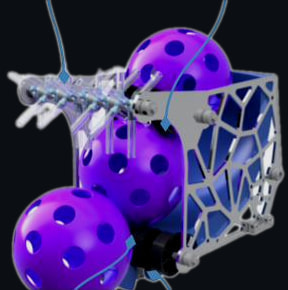
The transfer
The transfer: three artifacts held in order in a Voronoi-cut frame.
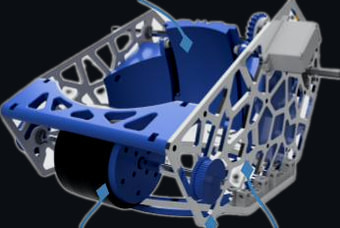
The launcher
The launcher: hooded flywheel on a 1:1 dual-servo turret.
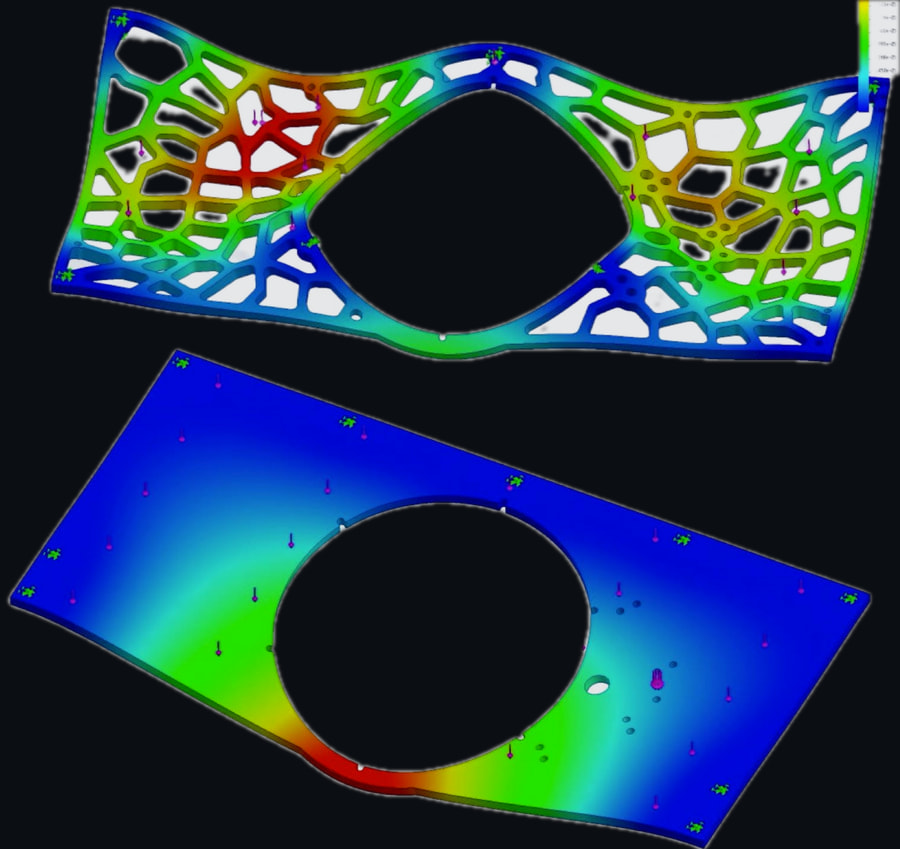
Side-plate stress analysis
Stress analysis of Monti’s plates: the Voronoi side plate above, a solid plate below.
- The line is drawn from the equation the team published; the individual trials are not published, so no points are plotted.
- Distance is in centimetres, as the poster deck’s chart labels it. The unit of v is not legible in any source, so the axis carries the equation’s own values.
Launcher tuning: the team’s regression from 200+ trials at 8 mm compression, redrawn from the equation.
How it works
Three drivetrains we have built or used. Move the pointer, or the slider, to steer.
Fastest and the most complex; not modular.
The comparison is the team’s own, from our engineering portfolio: swerve fastest and most complex and not modular; ball drive high torque and speed but oversized and not modular; strafer modular and very simple.
Facts
- My role
- Captain and operations lead, Tritonics #17253 (2025–26): team strategy, the electrical system, documentation and mentoring. Before that, electrical lead on #14712, and fabrication lead, then operations lead and captain, on Ulterior Motive.
- When
- Ulterior Motive in 9th and 10th grade (2022–24), #14712 in 11th (2024–25), Tritonics in 12th (2025–26, the FTC DECODE season).
- With
- Team #17253, called Ulterior Motive and later Tritonics (Scorpion, Ball-Drive, Monti), and #14712 (Swerve Drive, Honu). Tritonics is 100% student-led, with no team mentors.
- Now
- Continuing robotics at USC with Advanced Robotic Combat (ARC), the student combat-robotics team.
- Prototypes
- Five full robot iterations; 4 intake, 3 launcher and 2 transfer iterations in wood before metal.
(Awards)
- 2x NYC Champion, Inspire AwardLed electrical design, documentation and mentoring