Pip
- My role
- Team lead: the software and the fog screen.
- Year
- 2026
- Type
- AI character on a fog screen
- Status
- Built for class
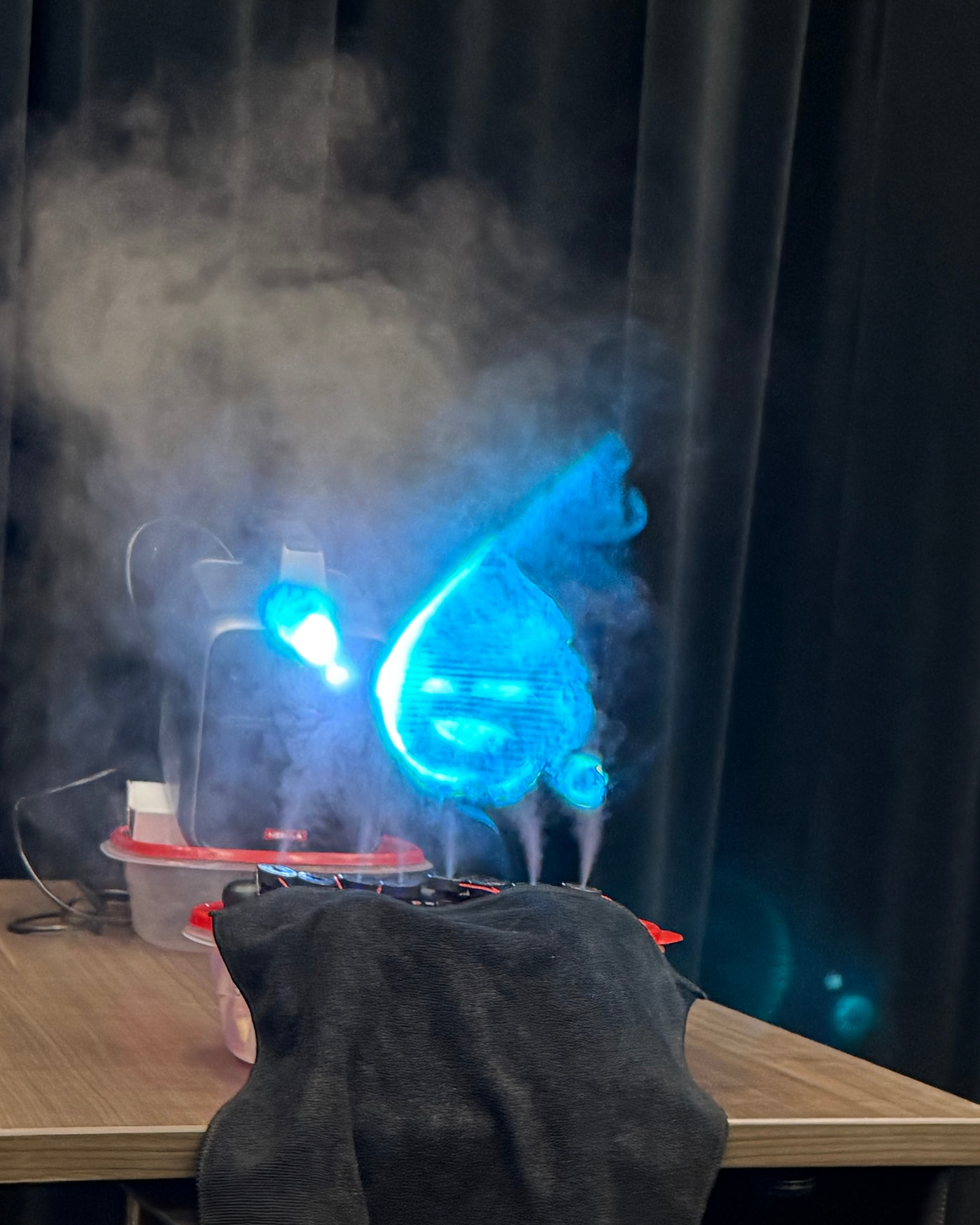
Pip on the fog screen I built: the water drop from our deck, projected from behind onto mist.
(Change Pip’s mood)
Pick one of Pip’s 24 moods and its eyes move to it, 43 numbers per face.
Pip, a glowing water drop, looking happy
Eyes and moods: Pip’s own renderer, a JavaScript port of pycozmo (MIT), whose presets credit the Expressive Eyes project. The drop is drawn from our deck’s geometry.
Our class asked what the future of vibe coding looks like. Our answer is Pip: a character on a fog screen that builds the app you describe out loud, while you watch. I led the team, built the software, and planned and built the fog screen.
- Status
- Built for Innovator’s Forum, fall 2026: the software, the fog screen and the class deck. The fog screen ran on 11 November 2026.
Say it, shape it, try it, launch it
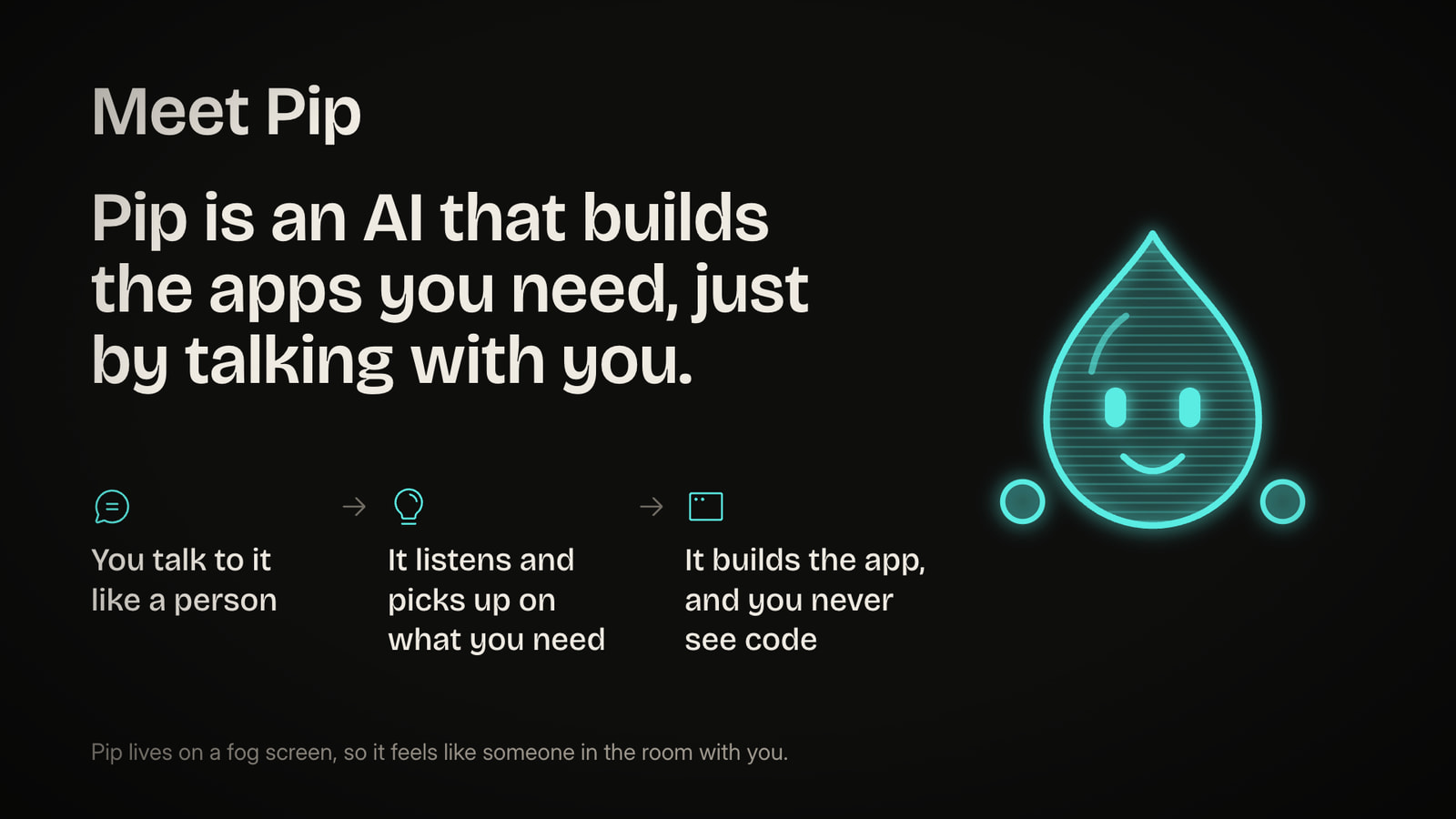
01 / 04
Say it
Walk up and say, out loud, what you wish existed. You talk to Pip like a person.
How the fog screen works
A projector behind the fogger draws Pip on a plume of mist. The screen is only air and water, so a hand passes straight through it.
The plan: ultrasonic misters in a sealed box, a fan pushing the mist up a 12 mm slot, and side fans to keep the sheet flat, about 50 cm wide. Pip is a line drawing, because lines read better on fog.
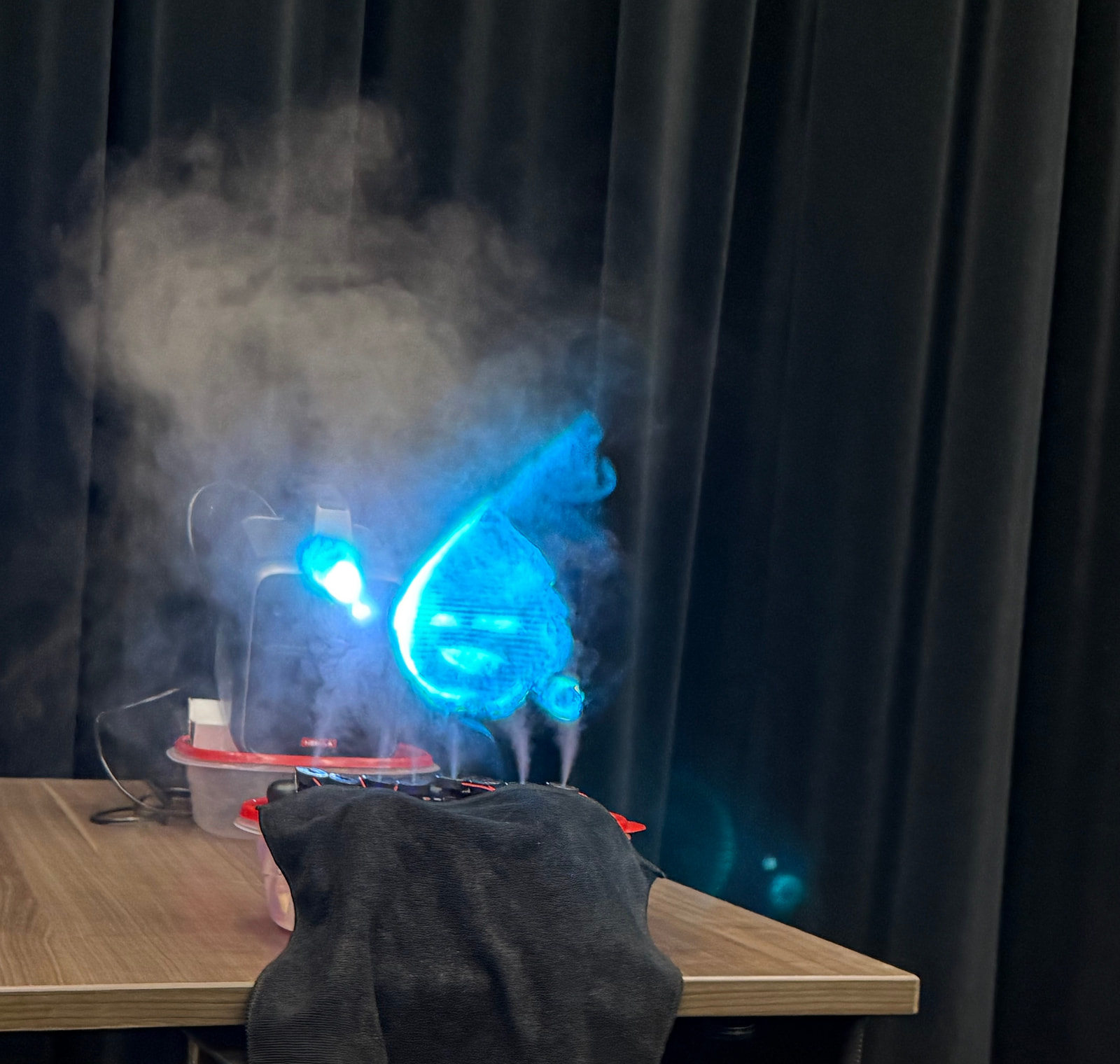
The whole rig: mist leaves the fogger in thin jets, and the projector behind it draws Pip on the plume.
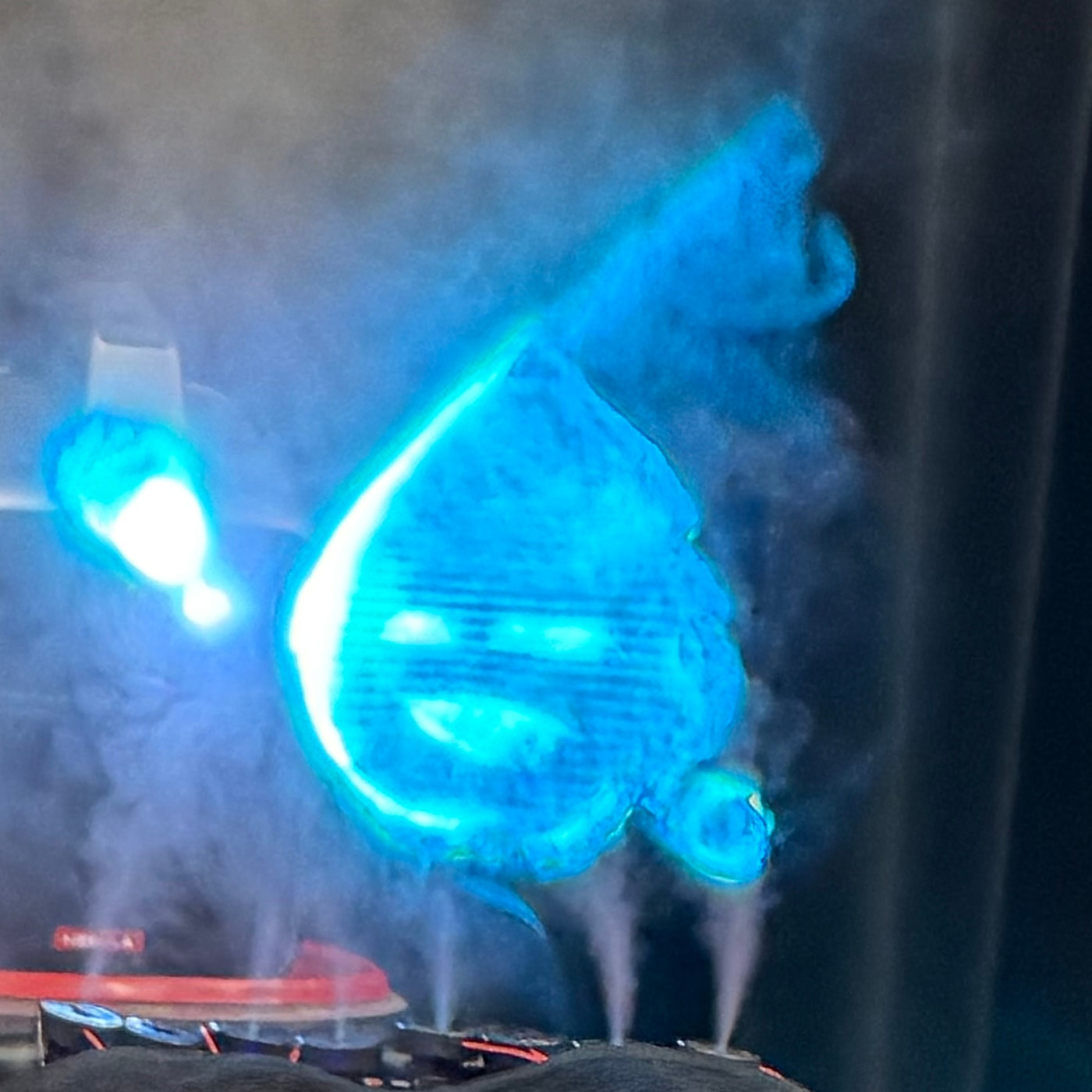
Close on Pip: the deck’s scan lines hold up in the fog.
Two screens
Pip listens on the fog screen, hands-free, and answers out loud; a second screen, the stage, shows the app being built. Its choices show as big bubbles, because text on mist is soft.
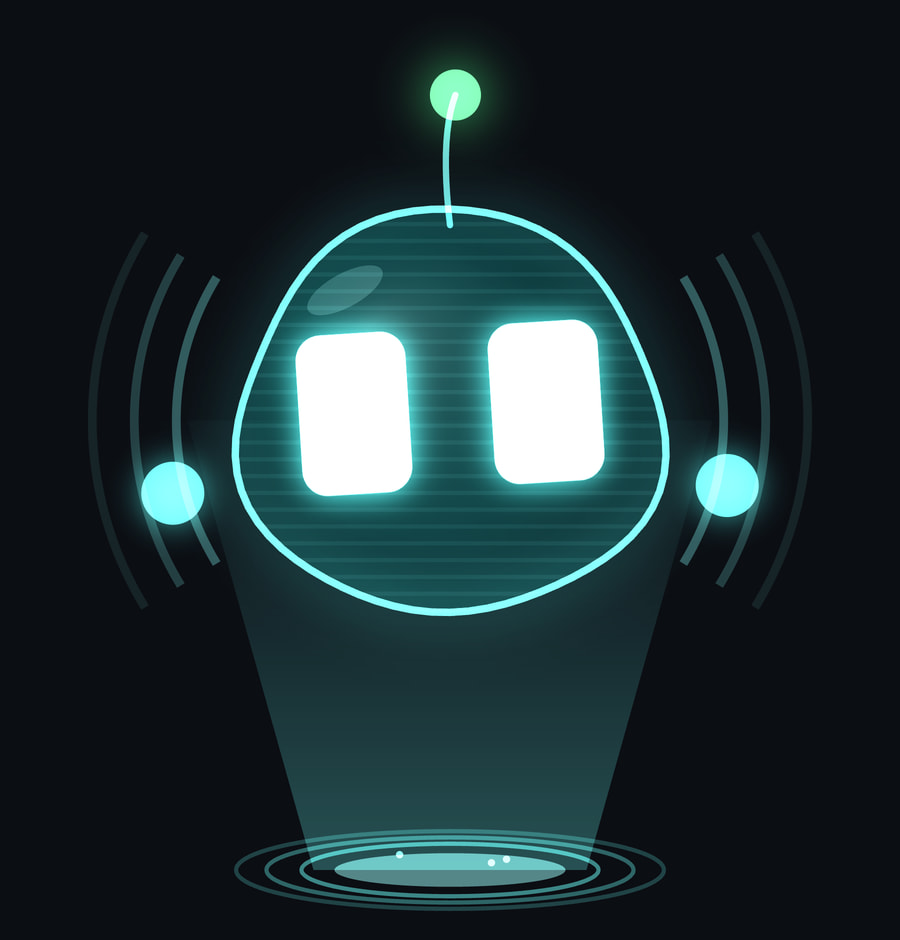
The software folder’s own drawing of Pip, listening: a round head, not the drop. A render of its code; eyes by a port of pycozmo (MIT).
What we learned
People told a character more about their problem than they would type into a box, and one question at a time felt calmer than “build anything”. Seeing what Pip heard before it built did more for trust than any explanation.
Facts
- My role
- Led the team; built the software; planned out and built the fog screen
- Class
- Innovator’s Forum (ACAD 174), USC Iovine and Young Academy, fall 2026; Group 7, five people
- Prompt
- 3a: “What does the future of vibe coding look like?”
- Software
- Plain JavaScript and a Node server, on Replit; the browser’s own speech recognition and speech synthesis, in Chrome
- Display
- A fog screen, projected from behind; the software also has front-projection, Pepper’s-ghost and four-sided pyramid modes
- Credits
- Eyes and expression presets: a JavaScript port of pycozmo (MIT). QR codes: qrcode-generator (MIT). Optional face tracking: Google MediaPipe Tasks Vision (Apache 2.0)